
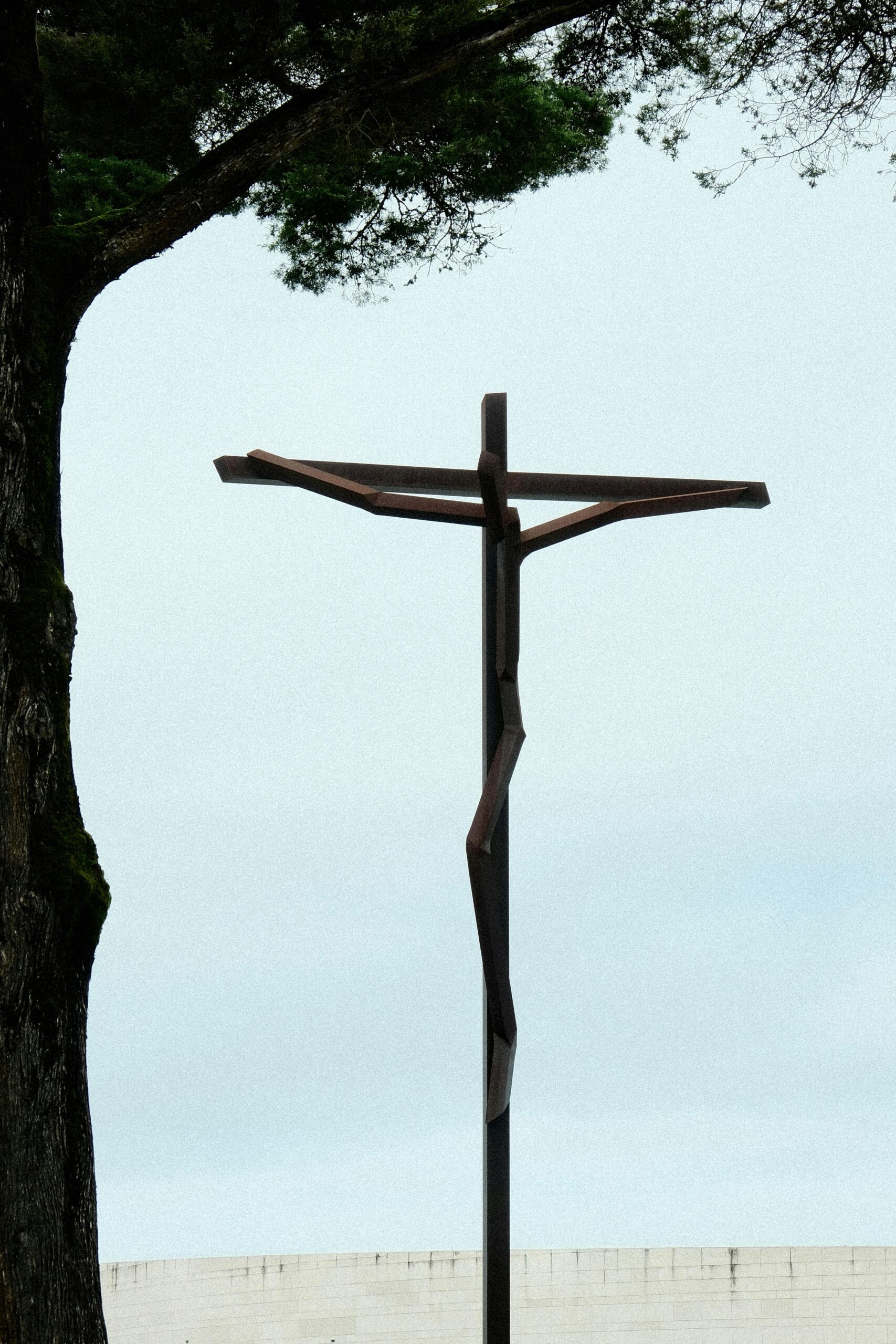
Easter 2026, Stages of the Crucifixion 18-25
We have been delving into the last part of Jesus’s life which is the story of his crucifixion and the events surrounding his burial and internment. These events can be described in stages and I have summarized them for you from Arnold Fructenbaum’s abridged work, Yeshua, the life of Messiah, from his four volume set on the life of Christ.
Last time we covered stages 9-17. They are listed as follows,
- Stage 9, The Superscription, Jn 19:19-22, Pilate had a notice prepared and fastened to the cross. It read: Jesus of Nazareth, the king of the jews. 20 Many of the Jews read this sign, for the place where Jesus was crucified was near the city, and the sign was written in Aramaic, Latin, and Greek. 21 The chief priests of the Jews protested to Pilate, “Do not write ‘The King of the Jews,’ but that this man claimed to be king of the Jews.”
- Stage 10, The Crucifixion of the two Rebels, Mt 27:38, Two rebels were crucified with him, one on his right and one on his left.
- Stage 11, The Fifth Mockery, Mk 15, 29-30, Those who passed by hurled insults at him, shaking their heads and saying, “So! You who are going to destroy the temple and build it in three days, 30 come down from the cross and save yourself!”
- Stage 12, The Sixth Mockery, Mk 15:31-32, In the same way the chief priests and the teachers of the law mocked him among themselves. “He saved others,” they said, “but he can’t save himself! 32 Let this Messiah, this king of Israel, come down now from the cross, that we may see and believe.”
Stage 13, The Seventh Mockery, Lk 23:36-37, The soldiers also came up and mocked him. They offered him wine vinegar 37 and said, “If you are the king of the Jews, save yourself.”
- Stage 14, The Eighth Mockery, Mt 27:44, In the same way the rebels who were crucified with him also heaped insults on him.
- Stage 15, The Rebel’s Conversion, Lk 23:39-42, One of the criminals who hung there hurled insults at him: “Aren’t you the Messiah? Save yourself and us!” 40 But the other criminal rebuked him. “Don’t you fear God,” he said, “since you are under the same sentence? 41 We are punished justly, for we are getting what our deeds deserve. But this man has done nothing wrong.” 42 Then he said, “Jesus, remember me when you come into your kingdom.[d]”
- Stage 16, The Second Statement from the Cross, Lk 23:43, Jesus answered him, “Truly I tell you, today you will be with me in paradise.”
Stage 17, the Third Statement from the Cross
Jesus now takes care of some very practical matters. John records the scene in Jn 19:25-27, Near the cross of Jesus stood his mother, his mother’s sister, Mary the wife of Clopas, and Mary Magdalene. 26 When Jesus saw his mother there, and the disciple whom he loved standing nearby, he said to her, “Woman,[b] here is your son,” 27 and to the disciple, “Here is your mother.” From that time on, this disciple took her into his home.
If we compare the similar accounts of Mk 15:40, and Mt 27:56, we can say there were four women who stayed near the cross. The first was Jesus’s mother, Mary. The second was her sister Salome, who was the mother of James and John, the sons of Zebedee (Mk 15:40). The third was Mary the wife of Cleopas. Cleopas was also the one who Jesus met on the Emmaus road. Last is Mary Magdalene, whom Jesus delivered early in his ministry (see Lk 8:1-3).
In his third statement Jesus address his mother and his disciple John. It was the expectation in every Jewish family that the first born son would care for his ageing parents. Since Joseph, Jesus’s earthly father had already passed, Jesus was now only responsible for the care of his mother. However he is now dying and he must transfer that care to another. Jesus makes a strategic decision. His half-brothers are still not yet believers so Jesus entrusts the physical care of his mother to his disciple John. He would rather have her cared for by a believer than a non-believer.
We now come to the second three hours on the cross in which Jesus suffers the Wrath of God. This occurred on Passover Friday, from noon till 3 pm. This latter three hours accounts for the 18-25th stages of the Crucifixion story. Collectively these are told in Mt 27:45-50, Mk 15:33-37, Lk 23:44-46, and Jn 19:28-30.
Stage 18, The Darkness over the Land.
Luke tells us that midway through the six hours that Christ was on the cross, a darkness came over the land. Lk 23:44-45 records this event, It was now about noon, and darkness came over the whole land until three in the afternoon, 45 for the sun stopped shining.
Interestingly, there are extra Biblical records of this event. One is by the Roman Historian Phlegon of Tralles who lived in Asia minor in the second century AD but recorded this event occurring at the time of Christ’s death.
Two other Greek writers, Dionysius who lived in Heliopolis in Egypt, and Diogenes who also lived in Egypt recorded the event. What scientifically happened is not known, but what the darkness signified was the spiritual separation between Jesus and his Father. This was the cup that Jesus did not want to drink.
Stage 19, The Fourth Statement from the Cross.
Matthew records our Lord’s fourth statement from the cross in Mt 27:46, About three in the afternoon Jesus cried out in a loud voice, “Eli, Eli,[c] lema sabachthani?” (which means “My God, my God, why have you forsaken me?”).
This statement is a quote from Ps 22:1-2 which reads, My God, my God, why have you forsaken me?
Why are you so far from saving me, so far from my cries of anguish? 2 My God, I cry out by day, but you do not answer, by night, but I find no rest.
Jesus quotes Ps 22 as a fulfillment of prophecy and it expresses his cry of anguish at the desertion of his Father’s presence while suffering his Father’s wrath for sin.
We will see in stage 24 Jesus once again cries out to God and at this time his fellowship is restored as he gives up his life once the penalty has been paid.
Stage 20, the Reaction of the Bystanders.
Matthew now records the reaction of those who are near the cross and heard Jesus cry out. Mt 27:47-49, When some of those standing there heard this, they said, “He’s calling Elijah.” 48 Immediately one of them ran and got a sponge. He filled it with wine vinegar, put it on a staff, and offered it to Jesus to drink. 49 The rest said, “Now leave him alone. Let’s see if Elijah comes to save him.
When Jesus cried out, Eli, Eli, those who were nearby misunderstood what he was saying. The words Eli Eli, mean my God, my God, but the word Eli is also a shortened form of the name Elijah. Therefore to the Hebrew ear some of the bystanders understood Jesus to be calling for Elijah.
Someone thought he was delirious so ran to get a sponge soaked in wine vinegar for his thirst and to alleviate his delusions, and by so doing fulfilled what was said in Ps 69:21, They put gall in my food
and gave me vinegar for my thirst.
Note the others restrained this offering, for they wanted to wait and see if Elijah would indeed come to rescue him (The rest said, “Now leave him alone. Let’s see if Elijah comes to save him.).
Stage 21, the Fifth Statement from the Cross.
John now records the end of Christ’s suffering in Jn 19:28, Later, knowing that everything had now been finished, and so that Scripture would be fulfilled, Jesus said, “I am thirsty.”
In Lk 16 we have recorded the story of the rich man and Lazarus. When the rich man enters hades, or torments, he complains to Abraham that he is in anguish because of the flames. In other words he is thirsty because he is suffering the flame and heat of God’s judgment. Now Jesus who for the past three hours has suffered the wrath and punishment of God cries out and states I am thirsty. This also fulfilled what was said of Jesus in Psalm 22:15, My mouth[d] is dried up like a potsherd, and my tongue sticks to the roof of my mouth; you lay me in the dust of death.
Stage 22, the Drinking of the Vinegar.
John now records in Jn 19:29 that Jesus partook of an offering of wine vinegar offered to him, A jar of wine vinegar was there, so they soaked a sponge in it, put the sponge on a stalk of the hyssop plant, and lifted it to Jesus’ lips.
This wine vinegar was more of a moisturizer than the concoction of myrrh and wine he was offered before. John notes Jesus now partakes of it. The most likely reason was that he was thirsty and needed something to clear his throat for the final two statements he would make.
Stage 23, the Sixth Statement from the Cross.
Now that his throat is cleared and his lips are more moist, John records in Jn 19:30a the most profound quote in human history, When he had received the drink, Jesus said, “It is finished.”
The Greek translation of it is finished is only one word, telestai, which is an accounting term and means paid in full. All the sacrifices over all the previous centuries were only installment payments. Now Jesus declares the debt had been paid. Atonement is secured, His Father is satisfied, and to those of us who come to Him by faith, salvation is now available through his sacrifice. Our sins are forgiven. We are new creatures in which he now indwells through his Spirit. He is now conforming us to his image and person. He has seated us with Himself in heaven. He intercedes for us. He has cemented our future and forgiven our past. And now through the power of his Spirit, He is using all of us to extend his message and Kingdom to others.
Stage 24, the Seventh Statement from the Cross.
Luke now records the last statement of Jesus’s life in Lk 23:46a, Jesus called out with a loud voice, “Father, into your hands I commit my spirit.”[e] When he had said this, he breathed his last.
Note first that Jesus addresses God as Father indicating the plea from the 19th stage (why have you forsaken me?) has passed and the paternal relationship has now once again been restored. He died spiritually on the cross and has now been spiritually restored before the moment of his physical death.
Second, Jesus choses the moment of his death and dismisses his spirit from his body.
Stage 25, The Death of Jesus.
Lk 23:46b states that after Jesus made his seventh statement he gave up his life, When he had said this, he breathed his last. Both Mk 15:37 and Mt 27:50 add that at the moment of death Jesus utters a loud cry. John 19:30 has another interesting observation regarding the moment of death. Normally a man dies and then would drop his head. In Christ’s case it is the opposite as John notes, when he had received the drink, Jesus said, “It is finished.” With that, he bowed his head and gave up his spirit.
1 Cor 15:3-4 outlines the three points of the gospel, For what I received I passed on to you as of first importance[a]: that
- Christ died for our sins according to the Scriptures,
- that he was buried,
- that he was raised on the third day according to the Scriptures,
Here in the 25th stage we have the fulfillment of the first point. Christ’s death specifically became the atonement and propitiation for our sin. That is a fancy way of saying his death was enough to fulfill God’s demand for a payment and Christ’s payment satisfied God’s demand for justice.
Stage 26, The Three Signs, the Veil tears, the Earthquake, and the Dead are Raised.
Immediately following our Lord’s death, three accompanying signs occurred. These are mentioned in Mt 27:51-56, Mk 15:38-41, and Lk 23:45b and 47-49.
The Veil is torn.
Mt 27:51 records two events that simultaneously occur when Jesus dies. The temple Veil tears and there is an earthquake. At that moment the curtain of the temple was torn in two from top to bottom. The earth shook, the rocks split.
Mk 15:38 gives us more detail on the Veil, The curtain of the temple was torn in two from top to bottom.
The veil was a curtain of cloth that separated the Holy of Holies where the ark of the covenant was from the Holy place in the tabernacle. Ex 26:31 records it was a curtain of blue, purple, and scarlet yarn and finely twisted linen, with cherubim woven into it by a skilled worker. At the time of Herod’s temple this veil was much larger than the one made for the tabernacle and was estimated to be 60 ft high, 30 ft wide and up to 4 inches thick. It was suspended from the roof of the temple and was of enormous weight. Yet at the moment of Jesus’s death this curtain was rent in two from top to bottom. The language suggests this occurred suddenly and rapidly.
The theological significance of this is laid out in Heb 10. Remember, according to the Mosaic Law only one man, of one family, of one tribe, of one race, of one nation, could enter God’s presence and at only one time of year. One man out of all humanity could do this and only after a sacrifice for himself and his people. But now, Christ has opened a new way by his blood, and we all, through faith, have direct access to God.
Heb 10:19-22, Therefore, brothers and sisters, since we have confidence to enter the Most Holy Place by the blood of Jesus, 20 by a new and living way opened for us through the curtain, that is, his body, 21 and since we have a great priest over the house of God, 22 let us draw near to God with a sincere heart and with the full assurance that faith brings, having our hearts sprinkled to cleanse us from a guilty conscience and having our bodies washed with pure water.
The tearing of the temple veil was a sign that the rule of the Mosaic law was now over and that the rule of faith could now provide access to God for all people, whether Jew or Gentile.
The Earthquake
Only Matthew records the earthquake and this is noted in Mt 27:51b, The earth shook, the rocks split. This event, coupled with the darkness, is what convinced the soldiers attending Christ’s crucifixion to declare he was the Son of God in Mt 27:54, When the centurion and those with him who were guarding Jesus saw the earthquake and all that had happened, they were terrified, and exclaimed, “Surely he was the Son of God!” Lk 23:47 says, The centurion, seeing what had happened, praised God, and said, “Surely this was a righteous man!
Luke notes in Lk 23:48 there was also a contingent of witnesses who were struck with fear and loathing when Jesus died as they beat their breasts, When all the people who had gathered to witness this sight saw what took place, they beat their breasts and went away. Beating your breast was an ancient near east custom that signified great remorse, sorrow, guilt, shame, and an expectation of judgement. It could also imply repentance, (as Jesus notes in Luke 18:9- 13, To some who were confident of their own righteousness and looked down on everyone else, Jesus told this parable: 10 “Two men went up to the temple to pray, one a Pharisee and the other a tax collector. 11 The Pharisee stood by himself and prayed: ‘God, I thank you that I am not like other people—robbers, evildoers, adulterers—or even like this tax collector. 12 I fast twice a week and give a tenth of all I get.’ 13 “But the tax collector stood at a distance. He would not even look up to heaven, but beat his breast and said, ‘God, have mercy on me, a sinner.’). but it didn’t have to.
Lastly, Luke notes in Lk 23:49 that those who were close to Christ witnessed his death in silence. But all those who knew him, including the women who had followed him from Galilee, stood at a distance, watching these things. (see also Mk 15:40)
The Dead are Raised.
The third sign is noted only by Matthew in Mt 27:52, and that is after Jesus died and accompanying his resurrection a number of people who were previously dead were raised to life, and the tombs broke open. The bodies of many holy people who had died were raised to life. 53 They came out of the tombs after Jesus’ resurrection and[e] went into the holy city and appeared to many people. What a shock this must have been! We should note these resurrected people did not receive their resurrected bodies but were rather given new life into their old bodies as Lazarus or Jairus’s daughter had experienced (see 1 Cor 15).
Note the realms in which these signs are expressed, the religious or spiritual (the torn veil), the natural (the earthquake), and the social (the dead were raised).
What was the reaction?
- The soldiers, Surely he was the son of God!
- The Centurion, surely he was a righteous man!
- The bystanders, they beat their breasts and went away.
- His followers, stood at a distance, watching these things.
What evidence do you need? And what reaction will you have?