We have been studying our salvation story and, as I have mentioned before, we have divided our discussion into three parts: what happened before we were saved, what God did for us at the time of our salvation, and what He did for us after we were saved. Most recently we have been discussing what happens at the moment of our salvation. We looked at the example of Zacchaeus and noted how God regenerates and calls us, which leads to repentance, and when appropriate, restitution. We then studied Abraham and noted with faith, God credits righteousness to us and justifies us. Today we will examine how God removes sin from us and this is explained through the theological concepts of Imputation, Substitution, Atonement, and Propitiation. Turn with me to Lev 16, for this chapter introduces these concepts.
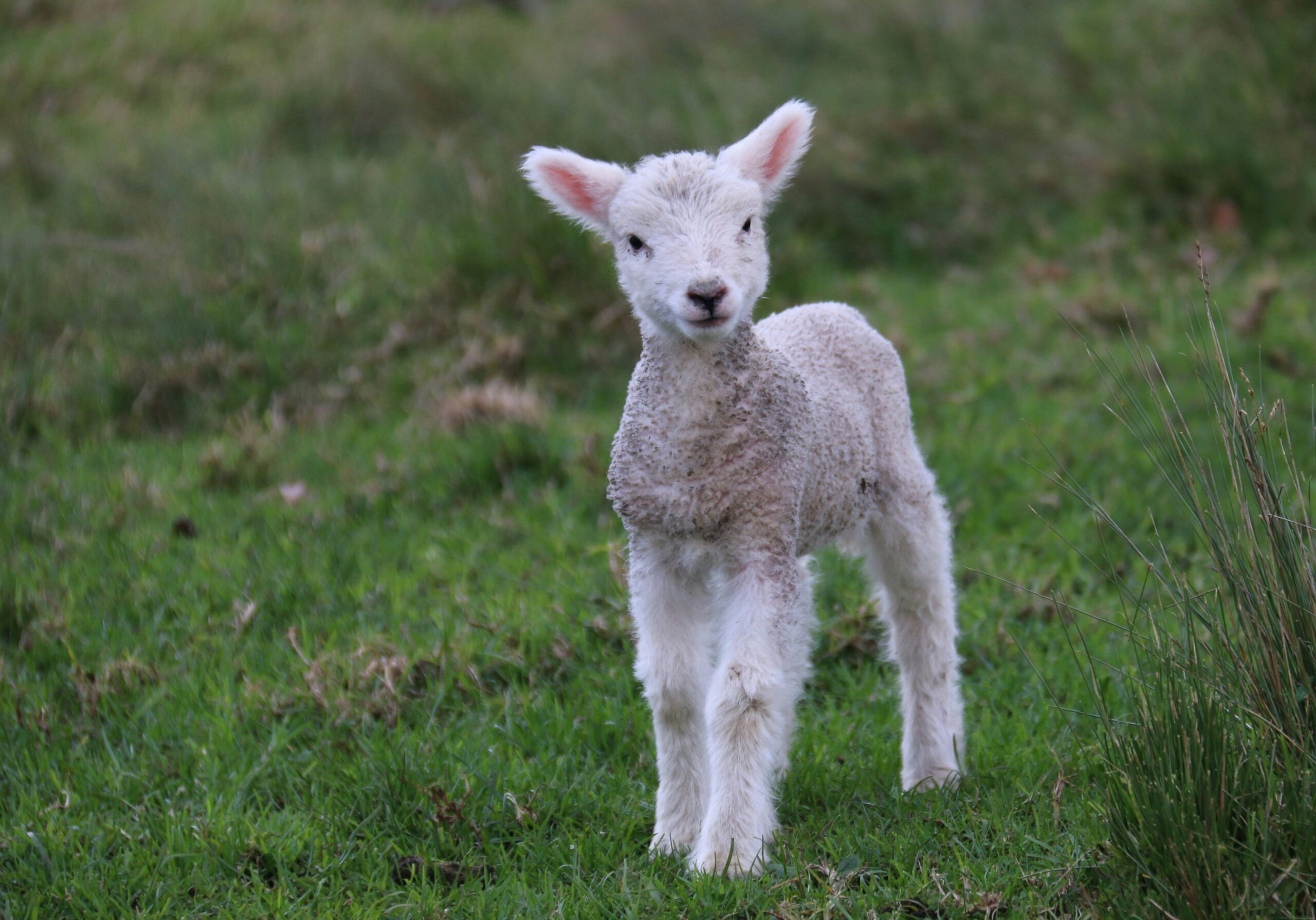
We need a bit of historical background to set the context of this chapter. In Exodus 12, God lays out a ceremony to be performed before the nation of Israel is to leave Egypt, and then to be repeated yearly as a remembrance of their deliverance. The Israelites are to take a year-old lamb without defect and watch it for four days to make sure it is healthy, then slaughter it, take the blood of it, and apply it to the sides and tops of the door frames of their house. That same night they were to eat the lamb with unleavened bread, and in so doing the angel of the Lord would pass over them and not kill their firstborn.
As we know, the Israelites leave Egypt and arrive in the wilderness of the Sinai peninsula. God directs them to Mt Ararat and God appears to Moses and in Ex 20, God gives Moses the Law. We then get to Exodus 25-31 where God gives Moses specific instructions as to how to build a tabernacle, where God would dwell with the people on their way to the promised land of Canaan (which as we all know, took 40 years because of disobedience and unbelief; far longer than anticipated). In the rest of Exodus and into Leviticus, God continues to spell out instructions as to how he wanted the people to live, and how He wanted the people to approach Him. Lev 16: The Day of Atonement.
In Lev 16, we are given special instructions for a National Day of Confession and Forgiveness called the Day of Atonement, which was the central event of the Jewish Sacrificial calendar. To understand the ceremony, it is extremely helpful to understand the layout of the tabernacle. Remember God is Holy and cannot tolerate the presence of sin. Holiness and sin are incompatible. This is why Adam and Eve were expelled from the garden. So, the question becomes, How does a Holy God dwell with an un-holy people? This was a tricky proposition as the sinfulness of the people threatened to pollute and defile God’s dwelling. On the other hand, the presence of a Holy God presented a threat to the sinful people. The answer was the tabernacle which established clear boundaries and buffer zones between God and his people.
I have provided an illustration of the tabernacle below.
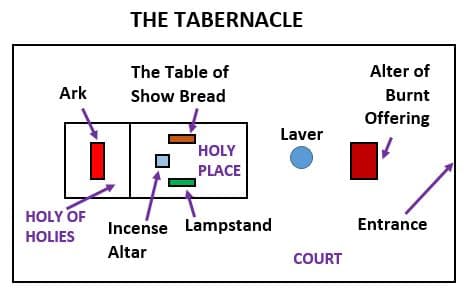
(the above from CARM.org)
Note: Outside the courtyard was the camp and just beyond the border of the camp was an area considered impure. It was the place you would go if you were “unclean.” Beyond this unclean border zone was the world which was considered profane. Both the camp and courtyard space were considered clean. Note the tabernacle is divided into two sections: The larger Holy place and the smaller Holy of Holies. The Holy Place is considered holy ground, while inside the Holy of Holies we have the presence of God: thus, it is the Most Holy Place. You can see a progression from profane (the outside world) to unclean (outside the camp) to clean (the camp and courtyard) to holy (the Holy Place) to most holy (the Holy of Holies): hence the buffer zone effect. God detailed specific procedures to move into His presence found here in Lev 16. Note common people could enter the courtyard, while only the Levites were allowed to enter the Holy Place, and only the High Priest could enter the Holy of Holies and then only once per year.
The process of approaching God with sacrifice was divided into nine steps: (the following adapted from StretchTheology.com).
Preparation, vs 1-5, 7. The Lord spoke to Moses after the death of Aaron’s two sons, who died after they entered the Lord’s presence and burned the wrong kind of fire before him. 2 The Lord said to Moses, “Warn your brother, Aaron, not to enter the Most Holy Place behind the inner curtain whenever he chooses; if he does, he will die. For the Ark’s cover—the place of atonement—is there, and I myself am present in the cloud above the atonement cover. When Aaron enters the sanctuary area, he must follow these instructions fully. He must bring a young bull for a sin offering and a ram for a burnt offering. 4 He must put on his linen tunic and the linen undergarments worn next to his body. He must tie the linen sash around his waist and put the linen turban on his head. These are sacred garments, so he must bathe himself in water before he puts them on. 5 Aaron must take from the community of Israel two male goats for a sin offering and a ram for a burnt offering. 7 Then he must take the two male goats and present them to the Lord at the entrance of the Tabernacle.
Note the sacrifice required five animals: Two for the High Priest, a bull, and a ram, and three for the people: two goats and a ram. The priest would cast lots over the two goats: one was for God, the other a scapegoat (one who escapes death). Note, Aaron was first to bathe (or whoever the high priest was) then wear a simple linen tunic for the ceremony.
Sin offering for the High Priest: 16:6, and 11-14. Vs 6, Aaron will present his own bull as a sin offering to purify himself and his family, making them right with the Lord:
11-14, Aaron will present his own bull as a sin offering to purify himself and his family, making them right with the Lord. After he has slaughtered the bull as a sin offering, 12 he will fill an incense burner with burning coals from the altar that stands before the Lord. Then he will take two handfuls of fragrant powdered incense and will carry the burner and the incense behind the inner curtain. 13 There in the Lord’s presence he will put the incense on the burning coals so that a cloud of incense will rise over the Ark’s cover—the place of atonement—that rests on the Ark of the Covenant.[d] If he follows these instructions, he will not die. 14 Then he must take some of the blood of the bull, dip his finger in it, and sprinkle it on the east side of the atonement cover. He must sprinkle blood seven times with his finger in front of the atonement cover.
First, the priest made a sin offering for his own sin. He offered the bull on the burnt altar, then entered the Holy place where he put incense in the incense altar. This created a smoky haze which obscured his vision and prevented him from seeing God and dying. He then entered the Holy of Holies and placed blood on the lid of the ark (called the atonement seat) which cleansed the Ark and the Holy Place of the priest’s sin (see also vs 20).
Sin offering for the People: 16:15-17. Then Aaron must slaughter the first goat as a sin offering for the people and carry its blood behind the inner curtain. There he will sprinkle the goat’s blood over the atonement cover and in front of it, just as he did with the bull’s blood. 16 Through this process, he will purify[e] the Most Holy Place, and he will do the same for the entire Tabernacle, because of the defiling sin and rebellion of the Israelites. 17 No one else is allowed inside the Tabernacle when Aaron enters it for the purification ceremony in the Most Holy Place. No one may enter until he comes out again after purifying himself, his family, and all the congregation of Israel, making them right with the Lord.
The High Priest now repeated the procedure with the goat that was chosen by lot and designated for God. The priest again enters the Holy of Holies and places blood on the ark thereby cleansing the ark of the sin of the people.
Cleansing of Holy of Holies: vs 15-16a, Then Aaron must slaughter the first goat as a sin offering for the people and carry its blood behind the inner curtain. There he will sprinkle the goat’s blood over the atonement cover and in front of it, just as he did with the bull’s blood. Vs 16a, Through this process, he will purify[e] the Most Holy Place,
Aaron now enters the H of H and cleanses it with blood.
Cleansing of the Holy place and Courtyard. Vs 16b-20, and he will do the same for the entire Tabernacle, because of the defiling sin and rebellion of the Israelites. 17 No one else is allowed inside the Tabernacle when Aaron enters it for the purification ceremony in the Most Holy Place. No one may enter until he comes out again after purifying himself, his family, and all the congregation of Israel, making them right with the Lord.
18 “Then Aaron will come out to purify the altar that stands before the Lord. He will do this by taking some of the blood from the bull and the goat and putting it on each of the horns of the altar. 19 Then he must sprinkle the blood with his finger seven times over the altar. In this way, he will cleanse it from Israel’s defilement and make it holy.
20 “When Aaron has finished purifying the Most Holy Place and the Tabernacle and the altar, he must present the live goat.
Aaron then comes out into the courtyard and sprinkles blood on the burnt altar, thereby cleansing the courtyard. Note the big picture: the tabernacle has been cleansed from the inside out. From the Holy of Holies to the Holy Place to the courtyard. The pollution and filth of sin has been conducted to the entry of the courtyard and waits to be carried away.
The Scapegoat Ritual: vs 21-22, He will lay both of his hands on the goat’s head and confess over it all the wickedness, rebellion, and sins of the people of Israel. In this way, he will transfer the people’s sins to the head of the goat. Then a man specially chosen for the task will drive the goat into the wilderness. 22 As the goat goes into the wilderness, it will carry all the people’s sins upon itself into a desolate land.
Aaron now places his hand on the remaining living goat and confesses the sins of the people onto it. All the sins of the people are now on the goat. Note the two goats act in tandem: one cleanses and washes sin out, the other carries it away. The goat is then led into the wilderness where it will never return. Sin has been removed and is remembered no more. The tabernacle is cleansed, the people are cleansed, and God can dwell with them as forgiven people.
Washing: Lev 16:23-24a. When Aaron goes back into the Tabernacle, he must take off the linen garments he was wearing when he entered the Most Holy Place, and he must leave the garments there. 24 Then he must bathe himself with water in a sacred place,
Killing animals is dirty work. Aaron now cleanses himself and changes clothes.
The Burnt offering: Lev 16:24b-25: put on his regular garments, and go out to sacrifice a burnt offering for himself and a burnt offering for the people. Through this process, he will purify himself and the people, making them right with the Lord. 25 He must then burn all the fat of the sin offering on the altar.
The priest now sacrifices the two Rams, one as a burnt offering for himself, the other for the nation. Burnt offerings made sacrificial atonement for the sinner who presented them, and for consecration and dedication. The end of the proceedings focuses not so much on cleansing the tabernacle but cleansing the people and their dedication to God.
Clean Up: Lev 16:26-28. The man chosen to drive the scapegoat into the wilderness of Azazel must wash his clothes and bathe himself in water. Then he may return to the camp.
27 “The bull and the goat presented as sin offerings, whose blood Aaron takes into the Most Holy Place for the purification ceremony, will be carried outside the camp. The animals’ hides, internal organs, and dung are all to be burned. 28 The man who burns them must wash his clothes and bathe himself in water before returning to the camp.
The man who led the goat into the wilderness had to wash and the remains of the animals had to be dealt with.
The remainder of the chapter details how the day is to be remembered, and its purpose as noted in verse 30, because on this day atonement will be made for you, to cleanse you. Then, before the Lord, you will be clean from all your sins.
(of note, Hebrews 9 is the NT commentary on this chapter).