
We have been studying OSS, and as I have mentioned before, we have divided our discussion into those things God has done for us before we came to faith, those things He did for us at the moment of faith, and those things He is now accomplishing after we came to faith. Today we will finish the section on what happened at the moment of faith and discuss the great doctrine of reconciliation.
Reconciliation is one of the key words of scripture and can be defined as that work of God whereby man is brought from the place of enmity to a place of harmony and peace with God. We have now covered many other terms regarding salvation (calling, regeneration, repentance, restitution, righteousness, justification, substitution, imputation, atonement, propitiation, and redemption) but reconciliation is the umbrella term that covers the rest. It encompasses all that God has done in removing the barrier that existed between God and man because of sin. It is this work which sets God free to justify us through faith in Christ so we may have peace with Him.
To start our study let us turn to Gen 25:19-34. This is the account of the family of Isaac, the son of Abraham. 20 When Isaac was forty years old, he married Rebekah, the daughter of Bethuel the Aramean from Paddan-aram and the sister of Laban the Aramean. 21 Isaac pleaded with the Lord on behalf of his wife, because she was unable to have children. The Lord answered Isaac’s prayer, and Rebekah became pregnant with twins. 22 But the two children struggled with each other in her womb. So she went to ask the Lord about it. “Why is this happening to me?” she asked. 23 And the Lord told her, “The sons in your womb will become two nations. From the very beginning, the two nations will be rivals. One nation will be stronger than the other; and your older son will serve your younger son.” 24 And when the time came to give birth, Rebekah discovered that she did indeed have twins! 25 The first one was very red at birth and covered with thick hair like a fur coat. So they named him Esau.[b] 26 Then the other twin was born with his hand grasping Esau’s heel. So they named him Jacob.[c] Isaac was sixty years old when the twins were born. 27 As the boys grew up, Esau became a skillful hunter. He was an outdoorsman, but Jacob had a quiet temperament, preferring to stay at home. 28 Isaac loved Esau because he enjoyed eating the wild game Esau brought home, but Rebekah loved Jacob. 29 One day when Jacob was cooking some stew, Esau arrived home from the wilderness exhausted and hungry. 30 Esau said to Jacob, “I’m starved! Give me some of that red stew!” (This is how Esau got his other name, Edom, which means “red.”) 31 “All right,” Jacob replied, “but trade me your rights as the firstborn son.” 32 “Look, I’m dying of starvation!” said Esau. “What good is my birthright to me now?” 33 But Jacob said, “First you must swear that your birthright is mine.” So, Esau swore an oath, thereby selling all his rights as the firstborn to his brother, Jacob. 34 Then Jacob gave Esau some bread and lentil stew. Esau ate the meal, then got up and left. He showed contempt for his rights as the firstborn.
In the text we see twin boys born to Rebecca, and God tells her each boy would be the source of a nation, yet the older would serve the younger. Then we see Jacob take advantage of the character weakness in his older brother and how he was able to purchase Esau’s birthright with a bowl of stew.
So, what is the big deal about having the birthright? In the ancient world the birthright symbolized four things.
- It provided a double portion of the father’s estate to the oldest son. In the case of Esau and Jacob, the estate would be divided into three parts and Esau, by his birthright, would get two of the three (a double portion).
- It assumed the leadership role of the family once the father was gone. The oldest son would be viewed as the family head, inheriting authority and responsibility for the family’s affairs. In this vein he would also be charged with the care of his father’s widows (for most ancient men had more than one wife) and also any unmarried sisters he had.
- It assumed spiritual leadership. The eldest son was responsible for the family sacrifice once the father was gone.
- It also provided for family continuity. The eldest son was to continue the family line. This explains why the next younger brother would have to lie with the oldest brother’s wife, if the oldest brother died.
We note in Gen 25, that Esau forfeited all these privileges for a bowl of stew. Then we note in verse 34 that he showed contempt for it.
Now turn to Gen 27. Here we have another scene close to the end of their father Isaac’s life. Rebecca overhears Isaac telling Esau to go hunting and once he has returned with some game, he was to cook it, and then Isaac would bless him. But at the urging of his mother Rebecca, Jacob prepares a meal, dresses as his brother, and deceives his father into blessing him as the firstborn rather than Esau. We pick up the text in verse 27, So Jacob went over and kissed him. And when Isaac caught the smell of his clothes, he was finally convinced, and he blessed his son. He said, “Ah! The smell of my son is like the smell of the outdoors, which the Lord has blessed! 28 “From the dew of heaven and the richness of the earth, may God always give you abundant harvests of grain and bountiful new wine. 29 May many nations become your servants, and may they bow down to you. May you be the master over your brothers, and may your mother’s sons bow down to you. All who curse you will be cursed, and all who bless you will be blessed.” 30 As soon as Isaac had finished blessing Jacob, and almost before Jacob had left his father, Esau returned from his hunt. 31 Esau prepared a delicious meal and brought it to his father. Then he said, “Sit up, my father, and eat my wild game so you can give me your blessing.” 32 But Isaac asked him, “Who are you?” Esau replied, “It’s your son, your firstborn son, Esau.” 33 Isaac began to tremble uncontrollably and said, “Then who just served me wild game? I have already eaten it, and I blessed him just before you came. And yes, that blessing must stand!” 34 When Esau heard his father’s words, he let out a loud and bitter cry. “Oh my father, what about me? Bless me, too!” he begged. 35 But Isaac said, “Your brother was here, and he tricked me. He has taken away your blessing.” 36 Esau exclaimed, “No wonder his name is Jacob, for now he has cheated me twice.[a] First he took my rights as the firstborn, and now he has stolen my blessing. Oh, haven’t you saved even one blessing for me?” 37 Isaac said to Esau, “I have made Jacob your master and have declared that all his brothers will be his servants. I have guaranteed him an abundance of grain and wine—what is left for me to give you, my son?” 38 Esau pleaded, “But do you have only one blessing? Oh my father, bless me, too!” Then Esau broke down and wept. 39 Finally, his father, Isaac, said to him, “You will live away from the richness of the earth, and away from the dew of the heaven above. 40 You will live by your sword, and you will serve your brother. But when you decide to break free, you will shake his yoke from your neck.” 41 From that time on, Esau hated Jacob because their father had given Jacob the blessing. And Esau began to scheme: “I will soon be mourning my father’s death. Then I will kill my brother, Jacob.”
Esau now plots to kill his brother. Rebecca discerns Esau’s intent and tells Jacob to high tail it out of town which he does. This event comes with a high personal cost to Jacob for he will never see his father or mother alive again. He will also have to live in virtual slavery to his uncle Laban (Rebecca’s brother) for twenty years. We know from Gen 32:3, after Jacob leaves Laban, Jacob has two wives, two concubines with twelve children, multiple servants, and lots of livestock. Jacob then reaches out to his brother after a 20 year absence. Scripture give us no clue as to why he did this. Laban lived in Haran which is far north of Israel in what is now northern Syria. Edom lies to the south and east of the Dead Sea. Jacob could have easily made his way into central Israel without Esau knowing of it. We pick up the story in verse 3, Then Jacob sent messengers ahead to his brother, Esau, who was living in the region of Seir in the land of Edom. 4 He told them, “Give this message to my master Esau: ‘Humble greetings from your servant Jacob. Until now I have been living with Uncle Laban, 5 and now I own cattle, donkeys, flocks of sheep and goats, and many servants, both men and women. I have sent these messengers to inform my lord of my coming, hoping that you will be friendly to me.’” 6 After delivering the message, the messengers returned to Jacob and reported, “We met your brother, Esau, and he is already on his way to meet you—with an army of 400 men!” 7 Jacob was terrified at the news. He divided his household, along with the flocks and herds and camels, into two groups. 8 He thought, “If Esau meets one group and attacks it, perhaps the other group can escape.”
Jacob left his brother twenty years earlier knowing Esau wanted to kill him. Now Esau is on his way with four hundred men to meet Jacob and Jacob is certain Esau will now kill him and his family and he (Jacob) is defenseless. So, he prays in verses 9-12, Then Jacob prayed, “O God of my grandfather Abraham, and God of my father, Isaac—O Lord, you told me, ‘Return to your own land and to your relatives.’ And you promised me, ‘I will treat you kindly.’ 10 I am not worthy of all the unfailing love and faithfulness you have shown to me, your servant. When I left home and crossed the Jordan River, I owned nothing except a walking stick. Now my household fills two large camps! 11 O Lord, please rescue me from the hand of my brother, Esau. I am afraid that he is coming to attack me, along with my wives and children. 12 But you promised me, ‘I will surely treat you kindly, and I will multiply your descendants until they become as numerous as the sands along the seashore—too many to count.’”
Jacob then gets an idea for survival which is described in verses 13-21. He will follow a plan of appeasement. He divides his flocks and puts them ahead of his family. Gen 33:1 states he then divided his concubines with their children and then his two wives with their children into groups and put them in front of himself. Note the value he placed on each according to where he placed them!
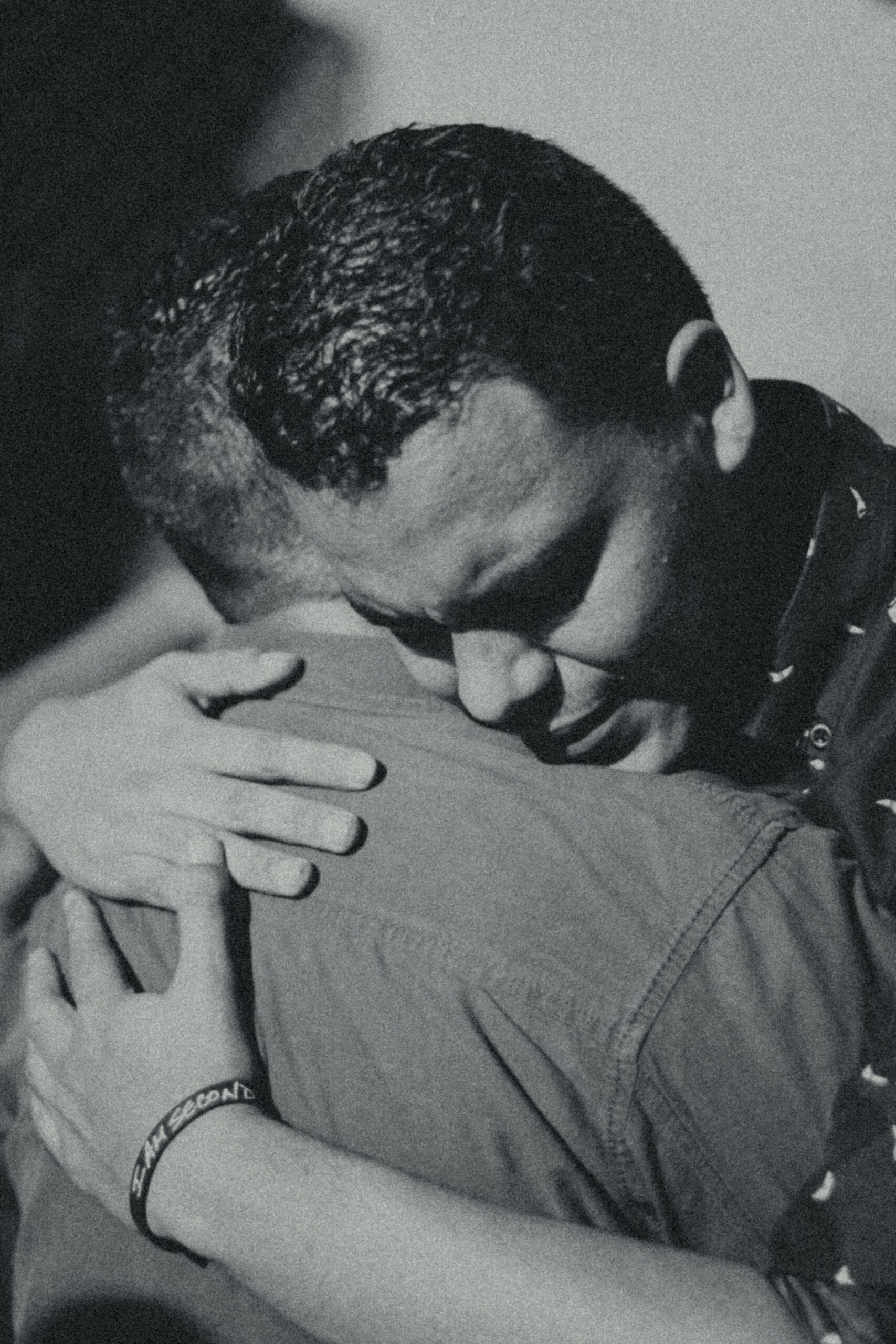
Gen 33:3-4 are the heart of the story, Then Jacob went on ahead. As he approached his brother, he bowed to the ground seven times before him. 4 Then Esau ran to meet him and embraced him, threw his arms around his neck, and kissed him. And they both wept. We know from the rest of Chapter 33, Esau and Jacob parted as friends. Where they once were enemies, they were now friends.
This is the central theme of the theological concept of Reconciliation; it is to take former enemies and make them friends. Romans 5:10-11 states this principle succinctly, For since our friendship with God was restored by the death of his Son while we were still his enemies, we will certainly be saved through the life of his Son. 11 So now we can rejoice in our wonderful new relationship with God because our Lord Jesus Christ has made us friends of God.
So, here are a few brief summary points of this doctrine.
Vs 10a, For since our friendship with God
Note the source of reconciliation is God; no work of ours is involved, 2 Cor 5:18, And all of this is a gift from God, who brought us back to himself through Christ.
Vs 10b, was restored by the death of his Son
Note the agent of reconciliation is the Lord Jesus Christ; It is he who died and bore our sin; as Col 1:20 says, and through him God reconciled everything to himself. He made peace with everything in heaven and on earth by means of Christ’s blood on the cross (see also Rm 5:10-11, 1 Pet 2:24-25).
Note also the means of reconciliation is the death of Christ on the Cross, as Col 1:21-22 says, This includes you who were once far away from God. You were his enemies, separated from him by your evil thoughts and actions. 22 Yet now he has reconciled you to himself through the death of Christ in his physical body. As a result, he has brought you into his own presence, and you are holy and blameless as you stand before him without a single fault (see also 2 Cor 5:21)
Vs 10c, while we were still his enemies, we will certainly be saved through the life of his Son.
Note the object of reconciliation is Man; there are many debates as to who is reconciled; is it God to man, man to God, or are both reconciled to each other? Scripture makes clear it is Man to God. God is not reconciled: he is propitiated, and man is reconciled. Man is the one at enmity and must be brought back, 2 Cor 5:19, For God was in Christ, reconciling the world to himself, no longer counting people’s sins against them (see also Rm 5:10).
Vs 11, So now we can rejoice in our wonderful new relationship with God because our Lord Jesus Christ has made us friends of God.
Note the result of reconciliation is peace between God and man; as Rm 5:1 also says, Therefore, since we have been made right in God’s sight by faith, we have peace[a] with God because of what Jesus Christ our Lord has done for us.
Now one other thing: We are the ministers of reconciliation. We have been entrusted with the message that sin can be forgiven and fellowship with God is possible, 2 Cor 5:19-20, And he gave us this wonderful message of reconciliation. 20 So we are Christ’s ambassadors; God is making his appeal through us. We speak for Christ when we plead, “Come back to God!” And also, that reconciliation can occur between men, Mt 5:23-24, So if you are presenting a sacrifice[h] at the altar in the Temple and you suddenly remember that someone has something against you, 24 leave your sacrifice there at the altar. Go and be reconciled to that person. Then come and offer your sacrifice to God (see also Eph 4:30).